
Adult staff in Australian schools
Primary, secondary, combined and specialist-school staff aged 18 or over may participate if they know enough about everyday school routines and informal spaces to respond.
Project guide and operating system
PlayReady provides the published reference framework. Play Latitude Schools puts its rationale and connected conditions into operation through a national scan and optional planning and reflection tools.
Participant guide
The essentials are packaged here. The formal Participant Information Statement remains available for complete study details.
Primary, secondary, combined and specialist-school staff aged 18 or over may participate if they know enough about everyday school routines and informal spaces to respond.
The core National School Scan takes about 12–15 minutes. No preparation, school records, student data or specialist play expertise are required.
No name, school name, employer, exact role title or exact postcode is requested. The person sharing the link cannot see whether you participate.
You may skip substantive questions or exit before submission. Anonymous responses generally cannot be withdrawn after submission because they cannot be identified.
What is in it for participants and schools
Play Latitude Schools turns dispersed everyday experience into evidence, shared language and realistic priorities.
Why this topic is important
Recess, lunch, transitions, outdoor time and supervision influence movement, connection, regulation, belonging and the flow back into classroom learning.
Staff also carry the practical load. Yard duty, supervision zones, difficult judgement calls, weather disruptions and transitions can shape workload and the rhythm of the entire day.
These experiences do not depend on one committed individual or a list of activities. They sit within a connected system of spaces, staffing, supervision, risk decisions, inclusion, leadership, professional learning and shared expectations.
Play Latitude Schools brings those conditions together so that strengths, pressure points and realistic priorities can be understood more clearly.
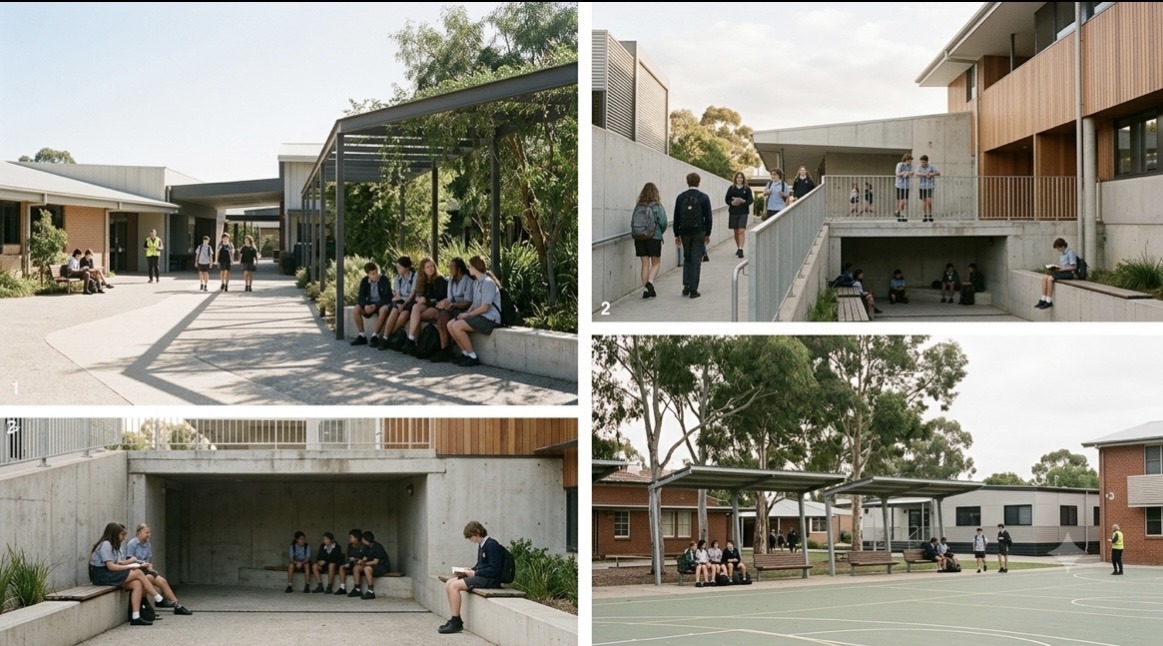
What teachers have already told us
Research with practising teachers across primary and secondary schools has repeatedly shown a gap between valuing play and informal school-day experiences and having the preparation, support and conditions needed to make them workable.
Teachers highlighted the need for stronger evidence, preparation beyond early childhood, clearer connections with formal learning and greater recognition of secondary students’ developmental needs.
Hooks, lines & thinkers: Teachers’ perceptions for the prioritisation of outdoor play
Read the open-access paper →Teachers reported limited preparation and professional development, and called for learning that is practical, sustained, coherent, collaborative and supported by leadership and policy.
Reimagining play in schools: Global teacher perspectives on professional development for quality play
Read the open-access Educational Studies paper →Teachers described how professional judgement, environmental limitations, collegial support, trust with students and opportunities for growth influence what can be sustained.
Outdoor play as experiential learning: How teachers’ autonomy, competence, and relatedness shape provision in schools
Read the open-access paper →These teacher-reported insights establish the rationale. The National School Scan examines how the connected conditions are experienced across Australian schools.
From reference framework to operating system
The published PlayReady paper documents the foundational rationale and connected conditions behind quality play and informal school-day experiences. Within this project, it serves as the reference framework for the National School Scan and wider digital pathway.
The framework responds to the gap between valuing play in principle and making it workable in everyday school practice. It brings staff experience and interconnection to the foreground, alongside capability, leadership, shared expectations, environments, supervision, workload, professional learning and sustainment.
Play Latitude Schools is the operating system for applying, testing and refining those conditions across Australian school contexts. The National School Scan is its diagnostic entry point. The optional Action Plan, Quick Pulse and Follow-Up Reflection support prioritisation, rapid feedback and continued refinement.
The framework provides the rationale. Australian school staff provide the lived evidence needed to test and strengthen it.
Play Latitude operating system
The National School Scan is the main way to contribute to the national study. The remaining tools are optional and can be used independently for planning or reflection.
Reflect on whole-school conditions, staff capability, supervision, workability, strengths, pressure points and realistic priorities.
Approximately 12–15 minutes
Contribute to the ScanOptional tools for goal setting and follow-up
These do not need to be completed with the Scan. They are available for schools or staff who wish to set priorities, give a quick response or return later to reflect on what happened.
A brief school-level process for protecting strengths and identifying up to three realistic priorities.
Approximately 5–8 minutes
A brief anonymous check on what appears workable, what remains difficult and how the Play Latitude Schools tools could improve.
Approximately 1–3 minutes
Return later to reflect on feasibility, usefulness, contextual fit and what may need further refinement.
Approximately 5–7 minutes
Privacy, sharing and formal information
The study does not request names, email addresses, school names, employer names, exact position titles or exact postcodes. Results are reported nationally or through sufficiently broad groups, with small or potentially identifying categories combined or suppressed.
No. Participation is privately decided. The organisation or person sharing the invitation does not receive individual responses and should not monitor or record completion.
No. The project does not inspect, certify, audit, rank or evaluate schools or individual staff. The School Scan is a research and reflection tool, not a validated benchmark.